
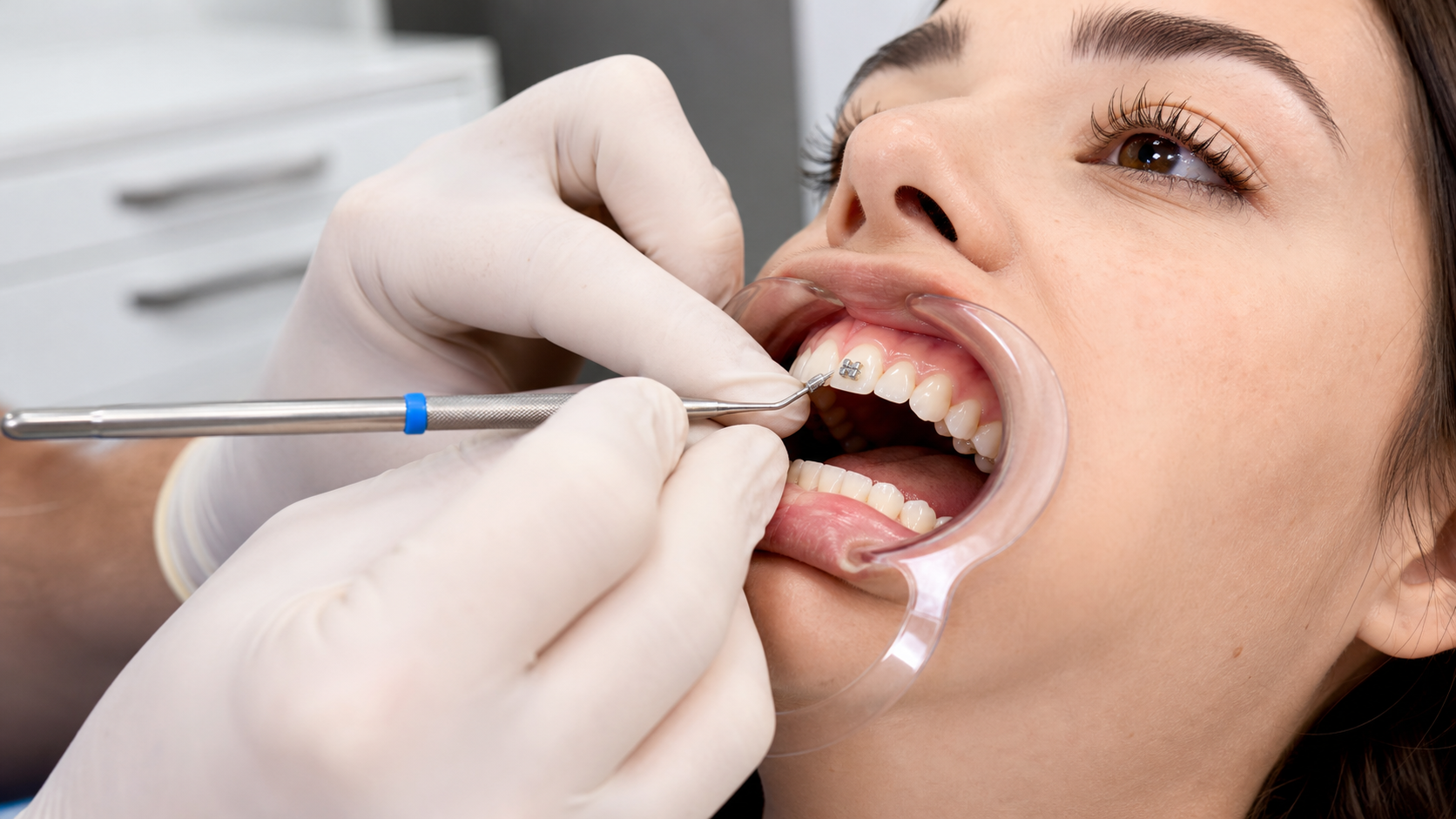
Can you get braces on your first appointment? Usually not. At Bayly Dental Clinic in Pickering, braces treatment starts with an initial orthodontic assessment, and bracket placement follows once your records are taken and your treatment plan is customized. Knowing what happens at each visit makes the whole process feel far more manageable.
Your First Braces Visits, Step by Step
- The first visit is a planning visit. It is an orthodontic assessment, not the day your braces go on
- Records come first. Photos, impressions or digital impressions, and X-rays help shape a plan built around your bite
- Bonding day is when the braces go on. Brackets are glued to each tooth and an arch wire connects them
- Placing braces is not usually painful. Soreness tends to come afterward, as the teeth start to move
- Adjustment visits follow. Periodic appointments keep treatment on track until your teeth reach their planned position
Most people walk into their first orthodontic visit expecting to walk out with braces. Then they find out it is mostly a conversation, some photos and a few scans.
That is a good thing. The time spent planning is what makes the rest of treatment predictable. This guide covers what happens at each early visit for patients in Pickering and Ajax, how to prepare, and what the first week with braces is really like.
Can You Get Braces on Your First Appointment?
In most cases, the answer is no. Braces are custom to your teeth and your bite, so the information needed to plan them has to be gathered before the brackets can go on.
At Bayly Dental Clinic, braces treatment is planned and delivered in a set order: an initial orthodontic assessment first, followed by bracket placement. Periodic adjustment visits are then scheduled over the treatment period.
That order exists for a reason. The full treatment plan is customized around your alignment goals, any bite correction you need, and growth considerations for younger patients. None of that can be worked out properly in a single visit. For children whose jaws are still developing, early interceptive orthodontics may be discussed before full braces.
What Happens at the First Orthodontic Assessment?
Your first visit is about understanding your teeth, your bite and what you want to change. Think of it as the foundation for every appointment that follows.
A Look at Your Teeth and Bite
The dentist examines how your teeth line up, how your upper and lower teeth meet, and how your jaws sit in relation to each other. You will be asked about your concerns, whether that is crowding, gaps or the way your teeth bite together.
At Bayly Dental Clinic, braces are most commonly recommended for moderate to severe crowding or spacing, bite issues such as overbite, underbite or crossbite, and tooth alignment problems that require precise, controlled movement.
Orthodontic Records
Records give the dentist a full picture of your mouth that cannot be seen in a chair-side exam alone. At Bayly Dental Clinic, planning braces treatment can involve:
- Standard orthodontic records, including photos, impressions and X-rays
- Digital impressions for treatment planning
- Imaging used to assess jaw position and tooth movement
The technology used is selected based on your age, case complexity and monitoring needs, so not every patient needs every type of record.
A Conversation About Cost and Coverage
Cost depends on treatment complexity and duration, so it is discussed once your needs are clear. Insurance may cover a portion of orthodontic treatment depending on your plan limits, and payment plans or financing options are offered for orthodontic care.
If you have dental insurance, bring your plan details to the first visit. It makes this part of the conversation much quicker.

Why Braces Are Not Usually Placed the Same Day
So, is it possible to get braces on your first appointment? Not usually, and that is by design. It can feel like a delay, but separating the assessment from bracket placement protects the quality of your result. Here is what happens in between:
- Your records are reviewed. The dentist studies how far each tooth needs to move and in which direction.
- A plan is customized. It accounts for alignment, bite correction and, for children and teens, jaw growth.
- Brackets and wires are selected. Bayly Dental Clinic offers both metal and ceramic (tooth-coloured) braces, depending on patient preference and case needs, and bracket and wire selection is based on durability, aesthetics and treatment complexity.
- Your options are explained. You will know what the plan involves before anything is placed on your teeth.
This is also the point at which the dentist confirms braces are the right choice. For some bite problems, another approach may suit better. If your concern is an underbite, our guide can Invisalign fix an underbite explains how that decision is made.
What Happens on the Day Your Braces Go On?
The appointment where braces are placed is often called the bonding appointment. Once you know the steps, there is very little to feel nervous about.
According to the Canadian Dental Association, the dentist or orthodontist attaches brackets to each tooth with glue, then fits arch wires into all the brackets, usually held in place with rubber or wire ties. In practice, the visit typically follows this sequence:
- Cleaning and drying. The teeth are cleaned and kept dry, because the adhesive bonds best to a dry surface.
- Preparing the tooth surface. A solution is applied to help the adhesive grip the enamel.
- Placing the brackets. Each bracket is positioned on its tooth with dental adhesive, then the adhesive is set.
- Fitting the arch wire. The wire is threaded through the brackets and secured with small ties.
- Going over care instructions. You will be shown how to brush around your braces and which foods to avoid.
You stay awake and comfortable throughout. There are no needles involved in placing braces, and most of the appointment is simply sitting back with your mouth open.
Will Getting Braces Hurt?
Placing the brackets themselves is not usually painful. The pressure and soreness most people describe come later, once the wire begins to move the teeth.
That soreness is common for the first few days after braces go on, and again after some adjustment visits. Your cheeks and lips may also feel tender while they get used to the brackets. Some ways to stay comfortable:
- Eat soft foods such as soup, yogurt, pasta and scrambled eggs for the first few days
- Use orthodontic wax on any bracket that rubs the inside of your cheek
- Rinse with warm salt water to soothe sore spots in the mouth
- Ask your dentist which over-the-counter pain relief is suitable for you, if you need it
If a wire pokes or a bracket comes loose, contact the clinic rather than trying to fix it yourself.
Your First Week With Braces
The first week is mostly about adjusting. Speech can feel a little different, eating takes more thought, and brushing takes longer. Most people settle into a routine quickly.
Foods to Avoid
Hard and sticky foods can bend wires or break brackets loose. Try to avoid:
- Hard candy, nuts, ice and popcorn
- Sticky foods such as caramel, toffee and chewing gum
- Biting directly into hard foods like whole apples or raw carrots (cut them into small pieces instead)
Keeping Your Teeth Clean
Food collects easily around brackets, so cleaning takes a little longer than it used to. Brush after meals where you can, angle the brush above and below the brackets, and use floss threaders or small interdental brushes between teeth.
Keeping up with your regular cleanings during treatment matters too. Healthy gums make for smoother orthodontic treatment.
What Comes After Your First Braces Appointment?
Once your braces are on, periodic adjustment visits are scheduled over the treatment period. At these visits, the wires may be changed or adjusted to keep your teeth moving toward their planned position.
How long treatment lasts varies with how much the teeth need to move and with patient compliance. Following your care instructions, keeping your appointments and protecting your brackets all help treatment stay on schedule.
When the braces eventually come off, a retainer helps hold your teeth in their new position. Our guide to keeping your results after orthodontic treatment explains how retention works.
Braces Appointment Questions From Patients in Pickering
Ready to Start Your Braces Journey With a Clear Plan?
Still wondering what your first visit will involve, or whether braces are the right fit for your bite? An initial orthodontic assessment gives you real answers.
- Every braces plan at Bayly Dental Clinic is customized around your alignment goals, bite correction and growth considerations
- Treatment begins with an initial orthodontic assessment, so you understand the plan before bracket placement
- Insurance benefits can be reviewed, and payment plans or financing options are offered for orthodontic care
To book a consultation for traditional braces in Pickering, call Bayly Dental Clinic or visit us at 1635 Bayly St, Building F, Unit 3, Pickering, ON L1W 3N2.

Orthodontic Retention: Keeping Your Results After Braces or Invisalign
Your retainer decides whether your new smile stays straight. Here is why teeth shift after treatment and how to keep your results.
Are Dental Implants Right for You? A Complete Guide
Discover how dental implants offer a permanent, natural-feeling solution for replacing missing teeth, preventing bone loss, and restoring your confidence.