
Straightening your teeth no longer means years of metal brackets and wires. Invisalign uses a series of custom-made clear aligners to move teeth gradually and discreetly, and it fits comfortably into the routines of both adults and teens. Choosing the right dentist in Pickering to guide your Invisalign journey makes a real difference in the quality of your results. At Bayly Dental Clinic, we take a thorough, hands-on approach to every Invisalign case, from the first scan through to the final aligner. This guide walks you through what to expect at each stage of treatment.
The Invisalign Consultation: Where Treatment Begins
Every successful Invisalign case starts with a detailed consultation. This appointment does much more than confirm that Invisalign is an option. It establishes the clinical foundation for the entire treatment plan and gives you a clear picture of what the process involves before you commit to anything.
Clinical Assessment
Your dentist in Pickering begins with a thorough examination of your teeth, gums, and bite. Gum health is assessed first, because Invisalign treatment cannot begin on a foundation of active gum disease or untreated decay. Any existing concerns are addressed before orthodontic treatment starts. This step protects your long-term outcome and ensures your mouth is in the best possible condition before aligners apply pressure to your teeth.
Your bite is also evaluated carefully. Invisalign handles a wide range of orthodontic issues well, including crowding, spacing, overbites, underbites, and crossbites. More complex bite corrections may require attachments or auxiliaries alongside the aligners. Your dentist will explain which elements apply to your case during the consultation.
Digital Scanning and Treatment Simulation
One of the most valuable parts of the Invisalign consultation is the digital scan. Rather than using traditional putty impressions, your dental team uses an intraoral scanner to capture a precise three-dimensional model of your teeth. The process is quick, comfortable, and produces highly accurate results.
The scan feeds into the ClinCheck software, which generates a detailed digital simulation of how your teeth will move through each stage of treatment. You can see a projected before-and-after outcome before a single aligner is made. This gives you a realistic sense of what treatment can achieve and allows your dentist in Pickering to map out the full sequence of tooth movements with precision.
Once you review and approve the treatment plan, the aligners are custom fabricated and typically arrive within a few weeks.
Understanding Your Treatment Plan
Before leaving the consultation, your dental team walks you through the full treatment plan. This includes the estimated number of aligner sets, the projected treatment duration, the location and purpose of any attachments, the frequency of check-in appointments, and the total cost including what your dental benefits may cover. Clear communication at this stage sets realistic expectations and helps patients stay committed and confident throughout treatment.
How Your Dentist in Pickering Monitors Invisalign Progress
Handing over a set of aligners and stepping back is not how well-managed Invisalign treatment works. Regular monitoring by your dentist in Pickering ensures the teeth are tracking as planned and allows early intervention when adjustments are needed.
Check-In Appointments
Check-in appointments typically occur every six to eight weeks throughout treatment. These visits are efficient, often running 20 to 30 minutes, but they cover important ground. Your dentist examines how each aligner fits against the teeth, looking for any gaps between the tray and the tooth surface that signal a tracking problem. Attachments are checked to confirm they are intact and functioning correctly. A loose or chipped attachment reduces the aligner’s grip on a specific tooth and can slow or alter its movement.
Your dentist also compares the current position of your teeth against the ClinCheck plan to confirm that movement is progressing on schedule. If a tooth has not moved as expected, your dental team will identify the cause and determine the appropriate response, whether that means extending wear time on the current tray, adding a new attachment, or planning a refinement.
Tracking and Refinements
Teeth move through living bone, and biological responses vary between patients. Some teeth move exactly as the digital plan predicts. Others move more slowly or in a slightly different direction than anticipated. When this happens, your dentist in Pickering has several tools to correct course.
For minor deviations, simply wearing the current aligner for additional time allows the tooth to catch up before progressing to the next tray. For more significant deviations, or when the original aligner series is complete but the teeth have not reached their planned final positions, refinements are the solution. A refinement involves taking new scans of the current tooth positions and generating a corrected aligner series that picks up from where the teeth actually are.
Refinements are a standard, expected part of comprehensive Invisalign treatment and not a sign that anything has gone wrong. At Bayly Dental Clinic, we discuss the possibility of refinements with every patient at the start of treatment so there are no surprises if they become necessary.
Interproximal Reduction
Some treatment plans include interproximal reduction (IPR), a procedure where a small amount of enamel is removed from between specific teeth to create space for movement. IPR is clinically safe and involves only a minimal amount of enamel. Your dentist performs it chairside at scheduled appointments during treatment. Creating the right amount of space in the right locations allows certain teeth to move freely without neighbouring teeth blocking their path.
Invisalign Care Instructions for Optimal Results
How patients care for their aligners and manage daily habits during treatment has a direct impact on outcomes. Your dentist in Pickering will review these instructions at the start of treatment, but keeping them in mind throughout the process keeps everything on track.
Wear Time Is Non-Negotiable
Invisalign aligners must stay in the mouth for 20 to 22 hours per day to work as intended. The aligners apply gentle, continuous pressure to move teeth. When they spend too much time out of the mouth, that pressure is lost and tooth movement stalls. Most patients find that removing aligners only for meals, snacks, and oral hygiene keeps wear time well within the required range.
Building a consistent routine is the most effective approach. Setting a reminder on your phone to reinsert aligners after eating takes only a moment and prevents the habit of leaving them out longer than intended.
Cleaning Your Aligners
Clear aligners require daily cleaning to stay hygienic and odour-free. Rinse aligners with cool water every time you remove them. Never use hot water, as heat warps the plastic and affects the fit. Clean aligners gently with a soft toothbrush and a small amount of clear, unscented soap. Avoid coloured or strongly scented soaps, which can leave residue or discolouration on the tray surface.
Invisalign cleaning crystals are another effective option. Soaking aligners in the solution for the recommended time removes bacteria and keeps the trays fresh. Avoid soaking aligners in mouthwash, as many formulas contain colouring agents that tint the plastic over time.
Oral Hygiene During Treatment
Brushing and flossing before reinserting aligners after meals is essential. Wearing aligners over food particles or plaque traps bacteria against the tooth surface and increases the risk of decay and gum irritation during treatment. Maintaining a thorough oral hygiene routine throughout Invisalign treatment protects both your teeth and your gum health while your smile is being corrected.
Using Chewies
Chewies are small foam cylinders provided by your dental team. Biting down on them after inserting each new aligner tray helps seat the plastic fully against every tooth surface. A tray that is not fully seated applies pressure unevenly and can contribute to tracking issues over time. Using chewies for a few minutes after each insertion is a simple habit that supports consistent tracking throughout treatment.
Storing Aligners Safely
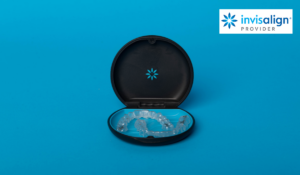
Always store aligners in their case when they are not in the mouth. Leaving them on a table, wrapped in a napkin, or in a pocket risks damage or accidental disposal. Keeping the case in a bag or pocket at all times removes the temptation to leave aligners out and protects them from warping or contamination.
Complete Your Invisalign Journey at Bayly Dental Clinic
Invisalign treatment delivers its best results when the clinical team is thorough, attentive, and communicative at every stage. From the first digital scan to the final refinement, the level of oversight your dentist in Pickering provides directly shapes the outcome you achieve.
Bayly Dental Clinic is located at 1635 Bayly Street, Building F, Unit 3 in Pickering, Ontario, and welcomes patients ready to explore Invisalign for the first time or those looking to continue treatment with a team that takes a careful, detailed approach.
Call us at 905-492-1234 or email baylydentalclinic@gmail.com to book your Invisalign consultation. A straighter, more confident smile is closer than you think, and we are here to guide you every step of the way.