

When comparing dental implants vs dentures, the best choice depends on your jawbone health, budget, and lifestyle. Dental implants offer a permanent, surgically placed solution that prevents bone loss, while traditional dentures are a removable, non-invasive, and more affordable option for replacing missing teeth.
Dental Implants vs. Dentures
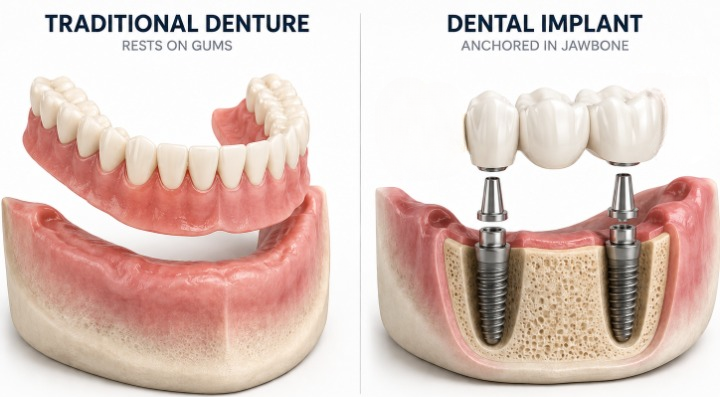
- Placement Style: Dental implants are permanently anchored into the jawbone, whereas traditional dentures rest completely on top of your gums.
- Jawbone Health: Implants act as artificial tooth roots to actively stimulate and preserve the bone; traditional dentures do not prevent natural bone loss over time.
- Lifespan and Durability: With proper care, an implant can last a lifetime, while traditional removable dentures generally need to be adjusted or replaced every 5 to 15 years.
- Daily Maintenance: Implants require no special routines-you simply brush and floss them like natural teeth. Removable dentures must be taken out daily for cleaning and soaking.
- Long-Term Value: While dentures are more affordable upfront, dental implants offer superior functional and health benefits, making them the gold standard for long-term value.
Losing one or more teeth can significantly impact your confidence, your speech, and your ability to enjoy your favorite foods. If you are researching how to restore your smile, you are likely weighing the two most common solutions: dental implants vs dentures.
Both options are highly effective for replacing missing teeth, but they function in completely different ways. To help you decide which treatment aligns with your lifestyle, we have broken down the clinical differences, benefits, and timelines so you can make an informed decision before booking a consultation for dental implants in Pickering.
What Are Traditional Dentures?
Traditional removable dentures are custom-made oral appliances designed to rest securely on top of your gums. They can be used to replace a few missing teeth (partial dentures) or an entire upper or lower arch (full dentures).
The Pros: They do not require any surgery or bone healing. The initial cost of dentures is generally lower than implants. Once your mouth is prepped and the appliance is fabricated, you can wear them immediately.
The Cons: Because they sit on the gums, they do not stimulate the jawbone, leading to natural bone loss over time. They can occasionally slip while speaking or eating and require messy adhesives. Due to changes in your jawbone shape, traditional dentures typically require adjusting or replacing every 5 to 15 years.
What Are Dental Implants?
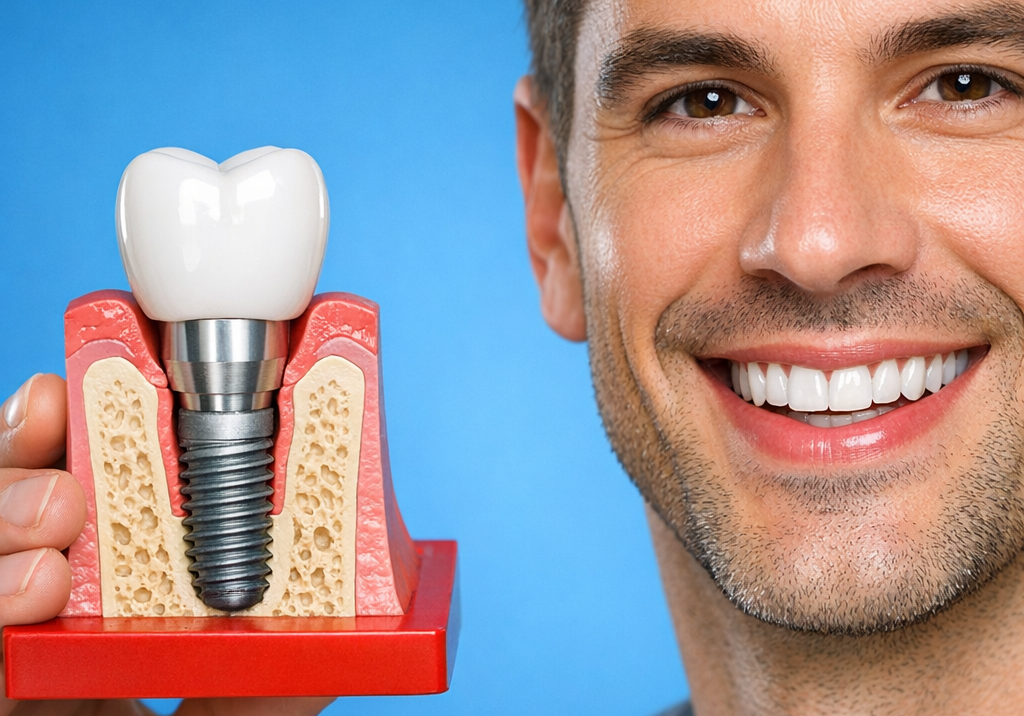
A dental implant is a permanent, surgical solution. Instead of resting on the gums, a small, bio-compatible titanium post is placed directly into your jawbone to act as an artificial tooth root. (You can learn exactly how this process works in our comprehensive guide: Are Dental Implants Right for You?).
The Pros: The titanium post fuses with your jawbone, actively preventing facial collapse and bone loss. They will never slip, click, or fall out while you eat or speak. With proper oral hygiene, dental implants are designed to last a lifetime.
The Cons: The procedure requires minor surgery and a healing period of several months. You must have adequate jawbone density and healthy gums to qualify. The initial upfront investment is higher than traditional removable options.
Dental Implants vs Dentures: Key Differences
| Feature | Dental Implants | Traditional Dentures |
|---|---|---|
| Placement | Surgically anchored into the jawbone | Rests on top of the gums |
| Bone Health | Stimulates and preserves the jawbone | Does not prevent natural bone loss |
| Longevity | Can last a lifetime with proper care | Usually needs replacing every 5 to 15 years |
| Maintenance | Brush and floss like natural teeth | Must be removed daily for special cleaning |
| Eating & Speaking | Functions exactly like natural teeth | May require adhesives; some hard foods are difficult |
Can You Have Both? (The Best of Both Worlds)
If you are missing a full arch of teeth but want the stability of an implant, you don't necessarily have to choose one or the other.
Many patients opt for implant-supported dentures (also known as overdentures). This treatment involves placing just a few strategically positioned titanium posts into the jawbone. A custom denture is then designed to securely "snap" onto those posts. This hybrid approach gives you the permanent stability and bone-preserving benefits of an implant, combined with the comprehensive coverage of a denture, often at a more accessible price point than replacing every single tooth individually.
Cost of Dental Implants vs Dentures
When evaluating the best option for missing teeth, budget is a very real factor.
Generally, traditional dentures have a lower upfront cost. However, because they require specialized cleaning solutions, adhesives, and replacement every decade, the long-term costs can add up.
Dental implants represent a higher initial investment. The final cost depends heavily on the number of teeth being replaced, case complexity, and whether preparatory procedures (like bone grafting) are required. (For a deeper dive into pricing, read: How Much Do Dental Implants Cost?). Because they are a permanent, lifetime solution, many patients find that implants offer the best long-term financial and health value.
FAQs About Replacing Missing Teeth
Which Option is Right for You?
Ultimately, the choice between dental implants vs dentures comes down to your unique jawbone health, your lifestyle preferences, and your budget.
If you want a fast, non-surgical solution, traditional dentures might be perfect for you. If you want a permanent, worry-free smile that preserves your facial structure, implants are the gold standard.
Ready to explore your options? Book a consultation at Bayly Dental Clinic today. Our clinical team will assess your jawbone health, discuss your goals, and help you choose the perfect restoration to bring your smile back to life.
Are Dental Implants Right for You? A Complete Guide
Discover how dental implants offer a permanent, natural-feeling solution for replacing missing teeth, preventing bone loss, and restoring your confidence.
How Much Do Dental Implants Cost?
Learn what determines the overall cost of dental implants, why they are an individualized investment, and how they offer superior long-term financial and oral health value.